
In the Classroom
Drawing from a career of digital innovation and industry firsts– including pioneering marketing roles at Salesforce and Airbnb, and in digital product development at Wired Magazine and The New York Times—Hayley brings Silicon Valley and media insider perspectives to her teaching at Northwestern University's Medill School. Through her courses, she guides students to think strategically about marketing and communications through the lens of technology, culture, and innovation—examining how disruptive change creates new opportunities for brand storytelling and customer engagement.
Hayley's approach is highly interactive and collaborative, encouraging students to develop, workshop, and defend their own points of view. Her teaching is informed by years of observing world-class CEOs and leadership teams from a front row seat, examining how they communicate, build culture, and lead through change. In her courses, students are exposed to real-world practicums through projects with top brands, and benefit from her deep network of industry leaders who join the class as guest speakers.
Beyond coursework, Hayley is an active mentor and career coach for her students, helping them find career paths aligned with their values and sense of purpose. Her courses prepare students to lead in a dynamic and fast-changing AI-enabled world with perspective and confidence.
Courses for Northwestern University, Medill School of Journalism, Integrated Marketing and Communications program:
Technology, Culture and Innovation (Fall 2025, Fall 2024)
Customer Centric Innovation (Fall 2023)
Courses for Northwestern University, Medill School of Journalism Master’s in Journalism program:
Content Strategy: Building Values-Driven Brands (Spring 2022, 2023, 2024)
Guest Lectures:
Northwestern University, Kellogg School of Management, Executive Education: “Buildng Agile Brands” (October 2024)
Excelia University, Paris, MBA program: “The Power of Brand Storytelling” (October 2025)
Past Courses
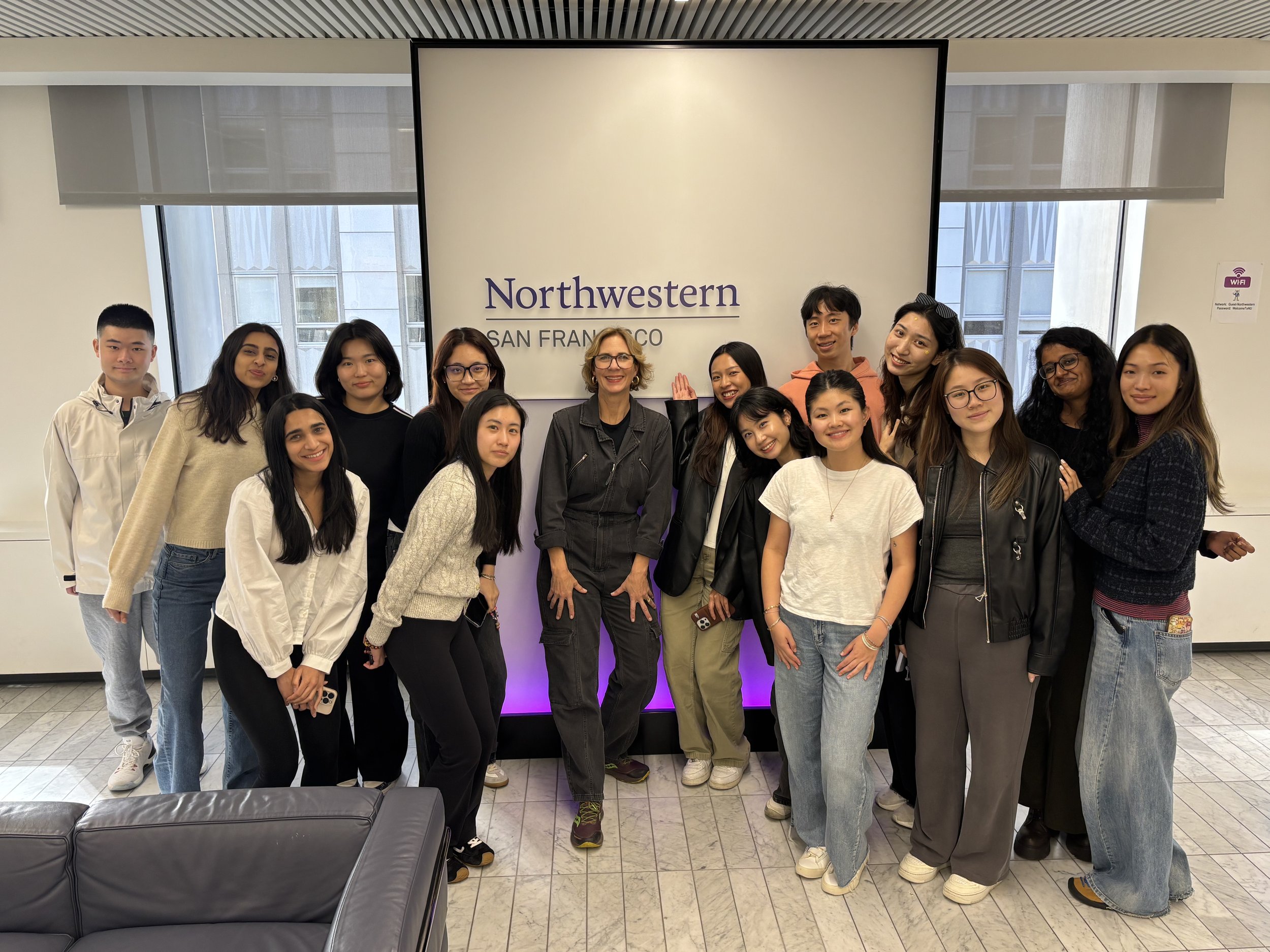
Technology, Culture and Innovation
In this dynamic 5-week course, students explore the intersection of technology and culture, diving into what actually makes Silicon Valley tick. What is the secret sauce, the thing that makes this area produce so many stand-out companies and technologies? We’ll ponder this, as we examine the drivers of breakthrough companies. And while technology is a strong component, great companies are built by talented humans who demonstrate strong leadership, build winning cultures, and nurture creativity and collaboration.
Starting with the origins of Silicon Valley, we’ll explore a simple but powerful idea: innovation happens when talented people with great ideas come together at the right moment, in the right place, with the right mindset and market timing. We'll dig into why this particular region became such a hotbed for innovation and examine how venture capital fuels the whole ecosystem. We’ll discuss some of the frameworks investors and entrepreneurs use to think about business viability and growth.
What separates exceptional founders and CEOs from the rest? We'll study the leadership mindset and explore how clear mission, vision, and values translate into strong brands, high-performing teams, and meaningful innovation. You'll learn about the importance of emotional intelligence, psychological safety, and growth mindset—the ingredients that help bold ideas actually flourish.
Industry leaders will join us to share how they build brands by nurturing collaborative teams and how they think about the right balance between embracing AI and empowering humans to ideate and create. Given how fast AI is changing everything, we'll focus on what makes humans irreplaceable in business: building culture, leading teams, encouraging collaboration, fostering creativity, and taking a long-term view when building brands. We’ll discuss the choices leaders must make around AI adoption, and you’ll develop your own point of view on these choices.
Through hands-on workshops, conversations with industry leaders, and company visits, you'll see firsthand how human-centered leadership creates the right conditions for breakthrough thinking. Your final project will be a practical playbook you can actually use as you navigate leading in our AI-accelerated world.
.
Customer Centric Innovation
In this course, we examine how companies use integrated marketing and communications to grow and sustain an advantage, from startup to scale. The best companies maintain a relentless focus on the customer, orienting their innovation cycles, marketing and communications to the customer and their needs. This course focuses on what a customer centric orientation looks like throughout the various stages of a company lifecycle. Through case studies of companies like Asana, Slack, Salesforce and Meta, we’ll learn what it means to be customer centric.
Key Concepts:
The Startup orientation is a great place to start our exploration of customer centricity and innovation. The best startups orient to solving a major pain point for their target segment.
A sophisticated digital experience is at the core of Customer Centricity;
Product lead growth is a powerful way to be Customer Centric;
Employee experience is at the heart of Customer Centricity;
Tune into your customers to keep your brand relevant through devices like Customer Advisory Boards.
Case Studies in Content Strategy
In this course we dive into the discipline of content strategy, studying examples from B2C and B2B companies. Students will learn the role of content in the marketing ecosystem, allowing them to plan, create and measure the impact of content strategy. Content strategy is now playing a crucial role in Generative Engine Optimization, whereby a solid content strategy is crucial for brands who want to be cited by the LLMs. The best content marketers rely on data and analytics, research and insights, creativity, and of course, great storytelling skills. We’ll study how companies use content to reach their audiences, build community and deepen engagement with the brand. We’ll discuss what it means to truly “break through” in culture with messaging.
We will also explore the purpose of content throughout the user journey, understanding the role it plays in the various stages of the marketing funnel and how to measure effectiveness. From inspiration, to education, to conversion and evangelism, we’ll examine how content serves a different purpose in each stage. We’ll discuss brand, community building, editorial voice, the role of channels, and learn about the key tools used by the content marketer, including the editorial calendar.
By the end of the course, students will be able to:
• Define content strategy and have a firm grasp of multiple instances of real-world applications;
• Design a content strategy for a new product or company;
• Understand how to create content frameworks, plans and measurement systems;
• Critique the effectiveness of a company’s content strategy around a product launch or key values-driven initiative.